Just Transition Commission of Ireland

Providing impartial, strategic, and evidence-based advice to inform policy planning related to a just transition across sectors and identifying the challenges, solutions and opportunities for Ireland.

Pause Video

For a transition to climate neutrality that leaves no one behind.

About the Just Transition Commission

Ireland’s Just Transition Commission is an independent advisory body to Government on how to ensure a fair and equitable transition to climate neutrality that is inclusive and supports workers, communities and those most affected by change.

Just transition is both a process and an outcome: planning proactively, sharing costs fairly, enabling skills and decent opportunities, and grounding decisions in lived experience so benefits—warmer homes, quality jobs, cleaner air, resilient regions—are widely shared.

Core content updates follow the Commission’s meeting cycle.

Evidence-Based & Structured

Ground all plans and decisions in robust research, data, and a systematic approach—ensuring actions are transparent and credible.

Fair Sharing of Costs

Distribute the costs and benefits of climate action equitably, so that no group or community bears an unfair burden.

Skills & Opportunity

Empower people with the training and skills needed to thrive in a low-carbon economy, and create new, decent work opportunities for all.

Social Dialogue & Lived Experience

Listen to and involve those most affected, valuing community voices and real-world experiences in shaping policy and solutions.

Resources

Latest Report

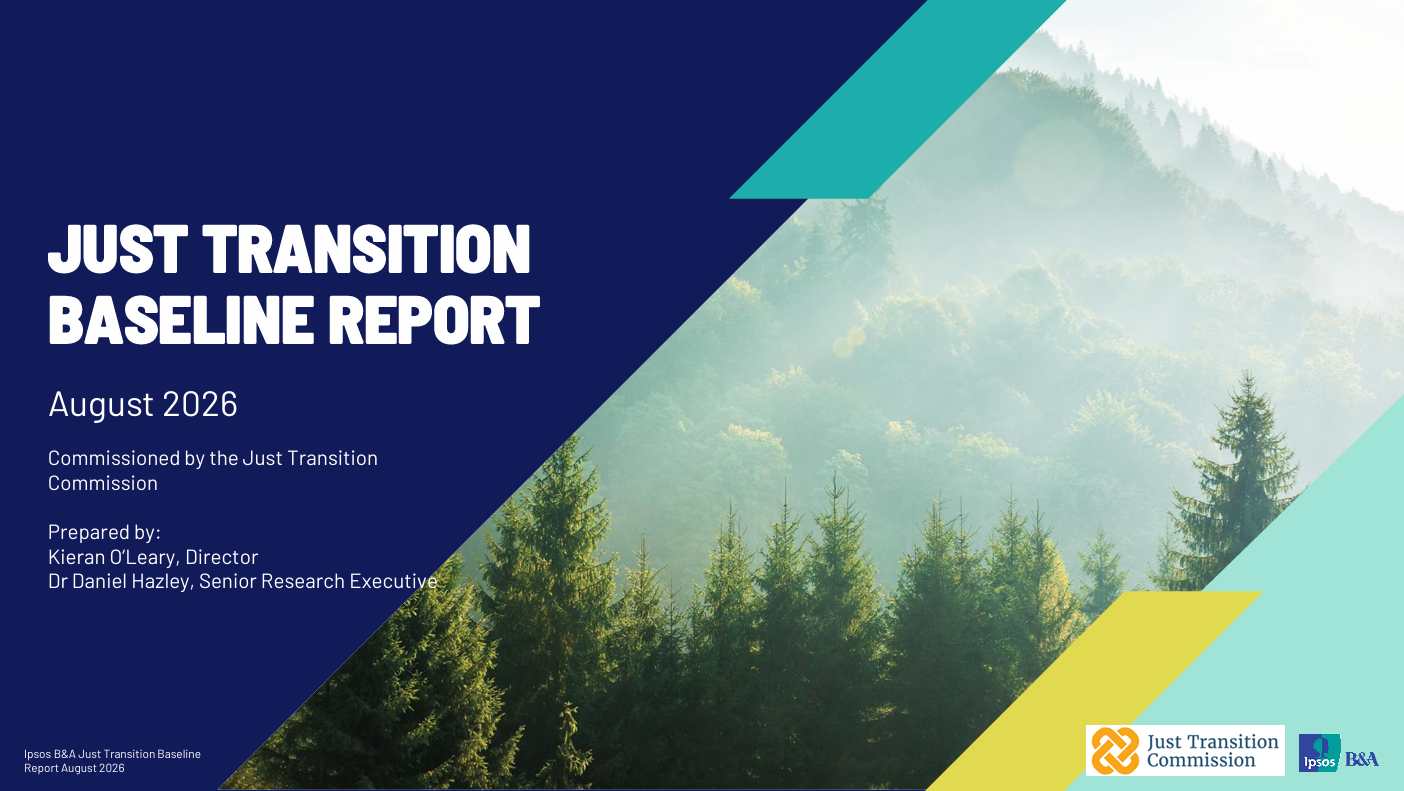
Our Introductory Report (June 2025) sets out mission, mandate and seven early recommendations to embed fairness and resilience in climate action.

Next Publication Teaser

Planned for Early 2026.

See All Resources

Our Introductory Report

Seven initial recommendations to guide how just transition can be embedded structurally in Ireland’s climate transition.

Governance

The Just Transition Commission of Ireland was established in late 2024 as an advisory body to the Irish government. The Commission consists of 9 ordinary Members and Chair, appointed by government for a three-year term (2024-2027).

Five members were nominated by the pillars of social dialogue, also referred to as the Agriculture-, Business-, Community & Voluntary-, Environmental-, and Trade Union pillars, and five are independent experts appointed through an open process